Most families are not unstructured. In fact, they have several thoughtful steps over time.
So, I find a business has been built & grows. Properties are acquired and held through different entities. Investments are made across accounts. Something is set aside for the children. In some cases, a trust is introduced. Each decision makes sense at the time it is made, all solving for a particular need. But I’ve found that when everything is viewed together, it often does not quite hold as a system.
It feels assembled rather than organised.
Where the gap begins to show
Take a family like the Apex family.
Over the years, they have built successfully. They run operating businesses, hold a number of properties, and have begun to invest more actively. Some assets sit in companies while others remain in personal names. There are accounts across jurisdictions and provision has been made for the children in different ways.
Nothing is necessarily wrong, but decisions are increasingly harder to make.
Where should a new investment sit? How should income flow? Who is responsible for what? What happens as the next generation begins to take on more?
The issue I’ve been seeing is not a lack of structure, but that the structure has grown in parts, without a clear centre holding it together.
What families like this often need is not more structures.They need a way to bring what already exists into alignment. This begins with clarity:
- Understanding how assets are currently held.
- Seeing how different pieces interact.
- Deciding, deliberately, how new investments should be positioned.
From there, something important begins to take shape. Not a single structure, but a coherent system through which the family owns, invests and makes decisions.
The role of a centre
As this system takes form, there is usually a need for a clear centre. An entity that is not tied to one individual, but is designed to hold and coordinate over time. This is where structures such as a private foundation or a private trust company begin to play a role.
I don’t mean as abstract legal ideas, but as practical anchors. They provide a point from which ownership can be organised, decisions can be structured, and continuity can be maintained beyond any one person.
Around that centre, other elements begin to align more naturally.
- Operating businesses continue to run.
- Investment vehicles can be positioned more deliberately.
- Assets can be brought into a clearer ownership framework.
- Governance begins to take shape in a way that reflects how the family actually wants to function.
What was previously fragmented starts to feel connected.
Tailored to each family
There is no single blueprint for this. The Apex family’s system will not look like yours. It reflects what they have built, where they are invested, how they make decisions, and what they want the future to look like.
This is why simply adopting what is common or popular rarely works.
A structure only holds when it fits.
When structure becomes a system, the shift is noticeable.
- Decisions carry more clarity.
- New opportunities are easier to accommodate.
- Ownership is easier to understand.
- The family begins to operate with greater alignment.
Importantly, the system does not depend on one person keeping everything together. It is designed to hold.
A final Hauskeeping thought
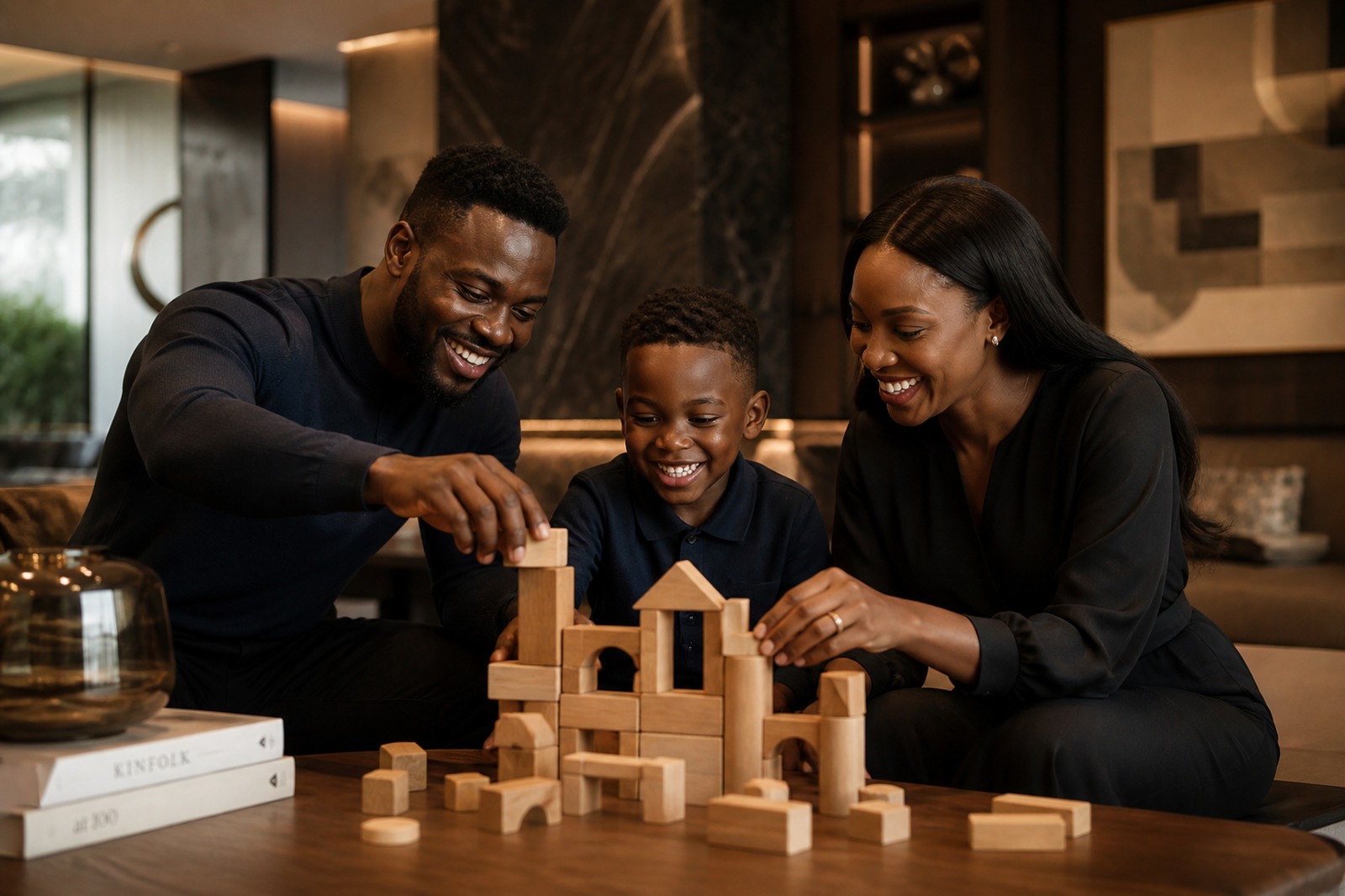
Like many families, you may already have the building blocks in place.
The real question is whether those pieces have been brought together in a way that supports how your family intends to grow, invest and evolve over time. Because continuity rarely comes from isolated decisions. It comes from how those decisions are organised.
Author – Olufunke Olumide, Partner, The Legacy Haus